

THE FIREBALL MONKEYS - GERMANY
|
|  |
Members Vocals Guitar Bass Drums |
History & Biography Reviews Interviews 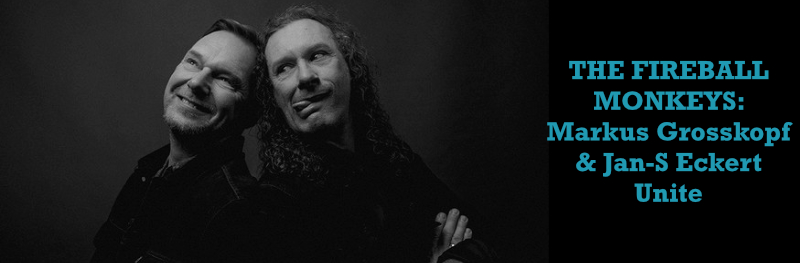 Two of metal’s influential musicians, Markus Großkopf of Helloween and Jan-Sören Eckert, former bassist of Iron Savior, venture outside their usual genres with their new rockabilly side-project, The Fireball Monkeys, and join Ali "The Metallian" for an exclusive, once-in-a-lifetime conversation, marking a rare moment we don’t often get to feature. Nevermind that Großkopf threatened to kill the interviewer!- 31.03.2026 JAN: Oh, yeah, OK! MARKUS: Hello. Hey. Alright, alright, alright. There you are, guys. How are ya? The project is called The Fireball Monkeys and joining Ali "The Metallian" on the screen side-by-side were two heavyweights in the world of metal: Jan-Sören Eckert, former bassist for Iron Savior and Masterplan, and Markus Großkopf of Helloween. As you can imagine, having both of them on screen at once was a rare moment. Two musicians with such storied careers don’t normally share a platform. It was an experience hosting them both, each from their own corner of the world, for an unforgettable morning! MARKUS: That's the three of us. As if we were sitting at one table. JAN: Yeah, I could invite you for a beer if you want, but (shows off his bottle of Holsten Edel) … MARKUS: You drinking person, you! JAN: Cheers. Cheers. Cheers. MARKUS: I just woke up. I just had a cup of tea (Note: it's 1:00pm in Germany). JAN: I've only been to Toronto once because we took the wrong way. I was working in Detroit and we took the wrong road and suddenly we were at the border! METALLIAN: Well, entering Canada must have been a respite and a breath of fresh air after being in Detroit. MARKUS: [Laughingly] He wanted to go to Detroit, took the wrong way and he found himself in Toronto. JAN: Almost. Almost. METALLIAN: I am happy to be speaking with you, but this is a little strange because I haven't heard the music (for The Fireball Monkeys). I am operating without having heard the music so I rely on you. So, Markus and Jan, it's a silly question, since I know your history, but I have to ask, how did this friendship come together? How did you guys get together and say, 'let's start a project?' MARKUS: Well, we know each other from the very, very early '80s, from the Hamburg rock scene, because everybody was playing bass in a different band. And we hooked up together, we met each other here and there, talking, having nice chats, drinking a couple of beers, you know, from the very early days in the '80s. JAN: Everybody was meeting at the same clubs and so we were meeting almost every week, I can say. METALLIAN: But this is your first project together that I'm aware of. MARKUS: Yeah, well, as far as I can remember, there was a band in the mid '80s. They needed a bass player for a demo tape and we kind of shared the job. JAN: Well, who was that? MARKUS: That was Andrea. JAN: Yeah, Andrea Matelli. MARKUS: André Martelli. What was his band at that time? Was it the Matteli band something? I don't know! JAN: [Speaking to Markus] I was in Charon and Mydra with André and then he departed from the band and started his own project. He wanted either you or me. So we did it together! MARKUS: Yeah! And then we said, 'well, why don't we share the job?' JAN: And we did the same... We did the same with the Bon Scott cover band. And we did the same with the Kickhunter band. MARKUS: That's right. That's where we played together and shared jobs. And then we just said, 'why don't we do a job on our own, just with us?'  METALLIAN: More history than I thought. How did the current project start? Who approached whom and who plays what?
MARKUS: Actually, the idea of doing such music, so different from metal… It's light years from metal. It's rock music in general. The music comes from the 50s. We both loved the music from the 50s, the way they played it, the 50s and the 60s. Like the good old rock 'n' roll, like the way Chuck Berry and Elvis Presley and all those dudes were playing it. We both loved it, but the main idea came from Jan actually, to record something. JAN: I visited Markus at the Baltic Sea and we were hanging out on the beach. It was winter time, but we were walking around on the beach having a pint of beer. Markus told me that he bought an upright bass, the classical upright bass and said, 'I want to play in a band with this upright bass, but everybody knows me as a metal player.' And then I said, 'funny because for me it's the same. I'm known as a heavy metal bass player, but I'm a guitar player and singer as well and nobody wants me as a guitar player and singer.' We then spoke about music and, especially, rock 'n' 'roll, rockabilly, bluesy stuff. And then the idea was born. MARKUS: I made him a guitar player and a singer and he made me an upright right bass player! We found out that we love this old kind of music, the traditional kind of rock' n 'roll when rock 'n' roll was born. The kind of romantic style of rock music where it all started and also combined with the sound of the Stray Cats a little bit here and there. We just love it so much. It's just the most romantic kind of rock 'n' roll music. It's so full of hope. METALLIAN: Is it full of hope? How do you see that? MARKUS: For me, it's the most romantic kind of rock' n 'roll music. It's like there's a lot of love. There's a lot there. It's authentic. It's what it all came from. If you go back in history, you can take a metal band from today and watch their idols. You try to figure out what they were listening to and then you find out that their heroes were listening to the Elvis rock 'n' roll kind of thing, Chuck Berry or Jerry Lee Lewis. That's where it all came from. It just developed over the years, you know? METALLIAN: I have two questions based on what you said earlier. So, before we go further, Jan, you are playing guitar and singing and Markus is playing upright bass. Is there anyone else in the band? MARKUS: The main project is Jan and me. We're The Fireball Monkeys. And then we have a drummer, Dani Löble from Helloween, who played drums on this album. He did a fantastic steaming job. But the main thing is Jan and me. METALLIAN: Markus, how did that upright bass get into your hands? I know a bass is a bass, but upright basses don't have frets. MARKUS: It's a fretless thing. It's hard to rehearse. I have some marks on the side of it, some dots, so I can see where I am on the neck. But I put the marks on myself. It's very easy. You put them on. You just need to know where it is. You just need to detune it and then put them on. It's just like the way I play the bass because it's kind of complicated if you play electric bass for 40, 45 years and then switch over to a fretless upright bass. I gave myself a little help. A real jazz guy would call me a wimp, but I just do what I like to do. It's helping me and it's sounding great. That's just the way I do it. JAN: I think both of us never had the attitude that we are the best players on the planet and we both gave each other time to find ourselves in this new role. I did a solo project, pnDynamics, with me as a singer and guitar player. I have played guitar for 50 years, but to be in this position is also new for me. Markus gave me the time to find myself, to learn and to make me fit into the system. It was the same for Markus. There was no rush. We said, 'OK, take your time and when we're ready, we're ready.' MARKUS: It really took a couple of years to get into it, to get from the very first idea, from the very first recording we did to the final product, the masterpiece and recording it, mixing it and mastering it. It took a couple of years, like four years, I guess. There was the pandemic. Then Helloween went on tour and whenever we had time, we stayed together doing songs. Most of them, apart from two songs, are done by ourselves. We got into this and suddenly you start having ideas like this. You start thinking in a different way about music. It's very magical. METALLIAN: So the start goes back to 2022. You said all the songs are yours, except two. MARKUS: Yeah, we… JAN: May I answer this, Markus? OK, because I come from acoustic guitar mainly and that's where I started and there was one song from the 50s. I heard a recording from an Afro American called Tarheel Slim. The song is called Number 9 Train. And I was so inspired because of its power and groove. Of course, it's an electric band with an upright bass, but even if it wasn't played with an electric guitar, it has this bluesy swingy style and the singer is really shouting because his wife left in the morning! Coming back to the point of hope, he said, there's one sentence in this song, he says, 'OK, everything is a mess, but I got to work hard every day. I got to save up all my pay and I go to the railroad station and get on my way' and so on. This is the positive message. MARKUS: This song is actually made for Jan's voice. What was funny was that during the recordings Jan said, 'let's do a sound check with the vocals' and I just pushed the record button to check out what the voice would be. And he sang it in one go. And then he said, 'alright, I'm kind of ready now, let's do it.' I said, 'no, no, no, wait, listen to what you just did.' And it was just that one go. JAN: And then I was kind of disappointed because I wanted to sing! MARKUS: No, no, I wouldn't touch it. Don't do it again. It's all right, I like the way it is. I think this song was actually done for his voice, although he wasn't born when the song came out! The song was too early for him. METALLIAN: And which is the second one you said is not your own song? MARKUS: The second one is a funny story. When Dani Löble, the drummer, recorded the drums, we weren't there. He recorded them somewhere else on his own. I gave him that song as an example; how to play the drums. He thought he's supposed to record the drums for that song. Actually, I wanted him to just listen to the style of the drums and then go for something like it on all the other songs. Then he recorded the drums for it thinking we wanted to do this cover song. And then we said, 'alright, we have the drums, we do the rest, we add the guitars and the vocals to it!' I think it's quite a unique version that we did, very different from the original because we only got one singer, guitar, the bass and the drums. But I think at the end of the day, it turned out to be very cool. That one's called Making Love. METALLIAN: Who's the artist? MARKUS: The band is called the Top Cats and they are from Scandinavia. METALLIAN: I like to pick up on something you said. You said you hit the record button. Does that mean, Markus, that you recorded the album? Was it at your home studio? MARKUS: That was the home studio. The machines are fantastic today. They do not compare with anything you had in the 80s. They are very small, but it sounds amazing. METALLIAN: OK. And to go back to your upright, are you slapping the bass? MARKUS: No. I was trying, but I'm not at that level and I decided not to do so because if you slap and it's not in time, there's nothing more horrible than that, you know? And I decided that I'm not going to do something which I'm not really familiar with. I'd rather do without the slapping, but then be on time. There's nothing more horrible than a wrongly slapped bass. JAN: Markus, I have one question for Markus. I could play a short glimpse of Number 9 Train in the background now if we agree. MARKUS: Yeah, well, you can do it. So he gets a little idea about what's going on! JAN: Because we are releasing this in Japan, we are definitely not allowed to give anything out before the agreed date. We don't want to cause any trouble. Of course, we trust you, but let's see if this works now. (At this point, Jan begins to play a recording of their version of the song Number 9 Train off the album and not only was the duo's description of the album correct, Jan's gritty timbre is quite a departure and something of a surprise. This is music for swinging and dancing to during the good times with energy to spare. Jan's capable voice is bound to surprise the listener.) MARKUS: Right. So we hope it's not going out, but it's an example. That's the kind of attitude we're working with and we're dealing with. We love that. Yeah, it makes your ass move. We want to make the people move. We want to give a positive attitude. We want to see them dancing all night long. METALLIAN: Jan, your voice sounded gritty. MARKUS: Yeah. METALLIAN: There's a grit in the voice. Is that natural or you did you work on it? JAN: I think it came over the years. I just destroyed my voice. I was, of course, even in Masterplan I did the backing vocals and, for a certain time, I took over the lead vocals from Mike DiMeo for a certain time because he had some trouble with his voice. And if you jump into it, without warming up, it has an effect on your voice. But, I still can hit the notes. MARKUS: It's just him. And I like this voice and it fits the music so well. You know, you're going to hear it someday and you will agree. If not, we're going to kill you. JAN: Yeah! METALLIAN: Thanks for playing that, Jan. Let me take a step back, as I didn’t ask this earlier. Why is the name of the band The Firebird Monkeys and what's the reference? MARKUS: [Horsing around] We don't know. We don't get it. METALLIAN: Somebody must know and I'll ask it since I am still alive. JAN: We were looking for a cool rock 'n' roll rockabilly style band name and wondering what they were called in the 50s. What would they call themselves? And then because we are… MARKUS: Kind of old-fashioned… JAN: Both in power metal bands and these bands are always fantasy-related and, you know, the aliens are coming, the Anunnaki and… we were looking for a typical rock 'n' roll rockabilly band name from the 50s and we had some other different ideas, but… The Fireball Monkeys! Markus used to say that in this band, he's the 'fireball.' I'm the 'monkey'! I don't know what to think about this, you know? MARKUS: I think it's a good old-fashioned name, especially if you use the terms of bands from the early days like The Carpenters and so on. I kind of just like it. It fits the music. It fits the whole concept. METALLIAN: Is The Fireball Monkeys a side-project, a one-off or is it something that scratches an itch with you and you want to continue? How should we view this? MARKUS: [Jokingly] How do we take this? We already have a folder here where there's material for the second album. We think we will bring out the second album before the first album comes out. JAN: Yeah. If we go on writing this fast, like we do now, it can be possible that the second album comes out first. MARKUS: We override the first album (laughs)! JAN: There's more coming. We also recorded acoustic stuff without drums as well, which is live on camera. We did this in a very nice studio in Hamburg, Echo Park with the producer Eduardo Garcia… fantastic, fantastic studio, fantastic guy and Markus organized three camera guys and so we had a full camera team while we were recording this and the weather was perfect. The sun was shining in the studio. MARKUS: It's going to be released one day on some of those platforms like YouTube or whatever, you name it. And then that's going to come out actually on the Japanese release. We have a record deal that is solid and stable. Kind of a good old-school record deal. They release the CD on the 6th of May. Before that, there will be a single coming out and we are thinking we don't need a deal in Europe. In Hamburg, what's that shop called? JAN: It's Ballroom Hamburg. MARKUS: The shop is called Ballroom Hamburg. It's an online shop where he's trading CDs, and all this stuff, and we'll bring it out on platforms like Apple Music, maybe Spotify and so we don't really need a record contract. We try to do without one. JAN: There are different ways. You don't even need a distributor anymore. I suppose you have heard about Distrokid and things like that. There are many companies like that. They're offering very nice deals. You won't get rich with this, but I'd rather have 80% of a little than 100% of nothing, you know? In the old days, you had a record company, then you had the record company's distribution agency and you'd end up with 15 to 20% of your own songs. The rest is all for them. The times are harder now. We're not in the '80s anymore. Even bands like Helloween, very huge bands, they also make money playing live and selling merchandise. MARKUS: In the very early days, we were selling a hell of a lot of CDs, LPs and cassettes. [Jan holds up a cassette] Yeah, there's one! Times have changed, times are changing. Now we make money with touring and merchandise and all that kind of stuff. Of course, rock fans, they want to have that physical kind of thing… opening it and seeing who was playing and the liner notes in there. It is interesting for all those fans. It's quite common out there still, but it's not the amount of sales that you had in the 80s. You make your money by going out there, touring and selling merchandise. I tend to always say, 'it's like we got to go out there on the streets collecting our money', you know? METALLIAN: You mentioned that there is a single coming out and the album is due in May. What is the name of the single and what is the name of the album? JAN: Do I know this? MARKUS:I can write you an e-mail, a reminder. I'll write you a reminder. JAN: The name of the single… once more, we come back to positive vibrations and the topic of hope that Markus mentioned. The title of the first single will be Never Too Late because the lyrics are about that. I turned 60 in December. And so the chorus is, "it's never too late for good looking (runs his hand through his hair)" And here we are. MARKUS: Yeah, and to me, it's also a metaphor of like, 'it's never too late for anything you like to do anyway'. It's never too late to look good. It's never too late to make a new start. It's never too late to make love. It's never too late to say sorry. It's never too late to say, 'fuck off, I don't like you.' If you feel like it, it's never too late for anything you would ever do in your lifetime, you know? METALLIAN: And the album name? JAN: I think the album name will be the same. It's Never Too Late. MARKUS: No, no, no. The album name is A Rock 'n' Roll Sensation. JAN: Oh, yeah, OK, sorry. But here we can go again for a small bit of Never Too Late if you want [plays a sample]. METALLIAN: Do you know The Blasters? JAN: The what? No, not really. MARKUS: Not yet! 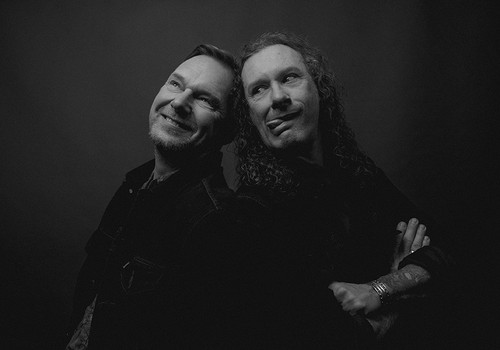 METALLIAN: You did that well. It sounds like you've been doing that type of music for a long time. It doesn't sound forced.
 JAN: I think that's what Markus meant when he said, 'we both grew up with it and this is where rock 'n' roll comes from.' I started with acoustic guitar. I love the acoustic guitar, but I also played and learnt to play the trumpet. All of my life, I have been a big fan of Elvis Presley and Bill Haley and those guys. Same with Markus. He also knew them from the beginning and so, I think, it's in our DNA. MARKUS: It's the kind of music that's been there forever and it's changed a lot. But we go back to where it once came from in a way… somewhere between that and making our own thing with it. With Helloween, there are choirs everywhere with thousands of voices, which is cool. And then you're stacking guitars till there's nothing left to do anymore, which is cool for the music we are doing with Helloween. It's big! But this, the way we work here is just recording one guitar. There is no rhythm guitar. Even when there's a solo coming up, there's only a bass and a drum through there. That's so different from what we do with our other bands. JAN: Yeah, because there's nothing you can hide behind. It's just the three of us. I think this was also new for all of us. MARKUS: Yeah, that's the basic thing, you know, hoping that the people have as much fun as we did with the recordings and with the mixing and all that. JAN: We were laughing so hard when we did all this. It was so great. It was really good. MARKUS: And there's a bit of beer that went down our throats. JAN: Yeah, of course. It helps sometimes. MARKUS: Yeah, sometimes it helps a little, little bit here and there. METALLIAN: Yes. I've heard about that! Must have been non-American. By the way, Markus or Jan, what's the name of the record company this album is coming out on in Japan? MARKUS: That's JVC. It's Helloween's record company. I asked the guy, 'are you interested?' I just didn't really expect any reaction to it. And then the guy said 'I was thinking.' I said to my Helloween manager, Jan Bayati from Bottom Row: 'Can you send it to JVC? Maybe they're interested.' I thought they're going to listen to it saying, 'all right, yeah, it's cool, but it's nothing for our label.' And then the answer came back. He kind of liked it. He was the guy, Yori, who was making the arrangement for JVC. Together with the Monkeys, he's also working with Brian Setzer from the Stray Cats. So he is kind of into that music, kind of liked it and gave us the deal, which is very cool. JAN: Brian Setzer, my absolute guitar hero when it comes to this music. I would never compare myself with Mr. Brian Setzer because he's the master. Brian made the White Falcon famous [At This point Jan stretches and lifts his guitar into view]. MARKUS: There you go. That's a classic. METALLIAN: Is that the exact same guitar? JAN: Yeah, this is exactly the White Falcon guitar. I also play a Fender Strat. Many recordings we did were with my Strat. Then Markus came up with the idea that we need a great White Falcon. MARKUS: Go and buy one! METALLIAN: Did you buy it recently or did you always have it? MARKUS: No, I stole it. I stole it. I took it off the wall in the record shop saying, 'I'm coming. I'm paying in October.' We just went there with Jan checking it out and it was really cool. And then we just bought it for the band! METALLIAN: Now you're authentic. MARKUS: Yeah, well, it's an authentic rock 'n' roll rockabilly guitar, isn't it? JAN: We are using tube amplifiers for the guitars and it's all… naked stuff. METALLIAN: Markus, you said something and I meant to ask about it. You mentioned your manager. Do you need to get permission from your manager to do something like this? MARKUS: No, no, not at all. We're just very easy. It's just a very, very great friendship as well with the management. They're not people with big suits and ties. They're guys like us. They're hanging around. They're doing their job. They know what they are doing. And I have all the freedom in the world. I don't have to ask anybody to do something like this. He's helping me out wherever he's able to. We do the stuff on our own, like doing the websites and when it comes to a deal, he's going to be involved a little or, if it comes to some questions like 'what should be in the credits on the record?' He will be there for me. He's helping out, but most of the time we do it ourselves and he's always there when there's a tricky question. But I don't have to ask anything. We have that freedom just like Andi (Helloween vocalist Andi Deris) is doing a lot of solo stuff too. JAN: Or Kai (Helloween singer and guitarist Kai Hansen). I mean Kai has Gamma Ray and whatever. METALLIAN: Well, I thought Gamma Ray was put to the side temporarily. MARKUS: Gamma Ray is what? No, no, he's just recorded. But that was not Gamma Ray. That was his Kai Hansen project. JAN: It was Hansen And Friends, I think, that's in the past and now it's just Hansen. MARKUS: Yeah. He did something called only Hansen. And he left out his friends (they both laugh good-naturedly). I don't know. But it was the same. Some of them are the same people from Hansen And Friends. I don't know. And now it's only called Hansen. JAN: [Jokingly] And if he goes on like that he'll turn even more into a German. He will end up naming it Hans. METALLIAN: Is there a chance you guys will perform live? MARKUS: Yeah. JAN: If there's time. METALLIAN: Are you looking for shows after the album's release should the album be selling? MARKUS:I would say 'yes.' We did some rehearsals already with a drummer here in Hamburg because if we rehearse during the week, I cannot fly in and then to arrange hotels for Dani for a couple of days… Dani is coming from the south of Germany, while we are rehearsing in the north of Germany. We have another drummer there playing with us, but the idea is cool and it's so much fun. But then I will be always with Helloween a lot of times and Jan is going out working on his big truck driving some stuff around Europe. JAN: I'm in the event business and we do motorsports. So I do Formula One and Imola and and I'm driving a video truck. You might have seen this big screen standing beside the track and I'm a technician for one of these. So I will be away the whole summer and Markus is on a world tour until the end of the year. MARKUS: We do like North America including Canada and Japan in April for like six weeks. And then the festival season is starting when he needs to go away. We see each other at some festivals. And then they and the drummer from Hamburg, we're playing with who's on the truck as well, driving stuff around Europe, right? So it's very hard to get the bunch together, but we try. JAN: Maybe in the winter time when I think the Helloween tour will be slowing down a little bit after one and a half years. My business most of the time is a seasonal one. So I have been off since early January and I will start working again in two weeks. So I was at home for three months. So then we have time to do things like this, what we're doing right now, recording new songs or producing a video or whatever. METALLIAN: Can you share who the drummer is that you're mentioning? JAN: Yeah, why not? His name is Frank. Frank Mölk. METALLIAN: Do I know him from any bands? MARKUS: Uh, what was the band he's been in? I can't remember the names. Wait a second. I have the Internet on here. JAN: Uh. Aeternitas. It's called Aeternitas. MARKUS: That's the guy we're rehearsing with. JAN: He will, of course, be the live drummer. He also comes from power metal also and was really digging it. One day he was playing too loudly and Markus and I had the same idea. We brought him brushes for the drums (they both begin to giggle) and he was like, 'oh, what's this?' I said, 'this is what you play with from now on' and he took it. METALLIAN: He ran with it! Is it OK to ask a couple of questions about your other activities before I lose you? MARKUS: Sure, you can ask whatever you like. JAN: Yeah! METALLIAN: Thank you. So, Jan, you don't have to answer this, but… JAN: Just feel free to ask whatever you want. METALLIAN: A few years ago there were reports that you had cancer. How are you doing? Is that behind you or ongoing? JAN: Yeah, to talk about the cancer, well, I killed that motherfucker. It's gone. I was very lucky. I was very lucky. It took me a few years. I was struggling with the side-effects from the chemo. But if I would complain about anything, I would be an idiot. So life is fine. I'm happy, I'm healthy, I'm well; all is good. METALLIAN: Why did you leave Iron Savior again? JAN: I didn't want to leave Iron Savior, when I left the band the first time in the early 2000s for Masterplan. I was just telling Pete [singer and guitarist Piet Sielck] that I want to do this because Pete didn't do very much touring-wise because of his family. It was just about time for me to leave. No hard feelings from my side. I wanted to make it as smooth as possible for the band, so I finally quit, after they had been touring with my replacement Patrick for a month. So the band was able to just go on. I'm still in contact with the Masterplan guys. I mean, I was with Axel (Mackenrott), the keyboard player in a billiard bar last week and we played pool and we also went on the motorbike together. So there's no bad vibes. Then I rejoined Iron Savior and then… but it was also to say it like the music from the 50s, B.B. King, the thrill is gone. For me then it was no fun anymore. It started more than two years ago when we played the 70000 Tons Of Metal. I felt like this is a great venue, but to what avail? Then I spoke to Piet about something that should be changing. And then, they had this longer tour, like for three months or so, and I said no, I'm not going to play the tour. And Patrick Opitz replaced me. Piet told me, 'take your time out, take your time out,' and I can come back whenever I want to come back. And then at the end of their tour I played half a song, half a set in Hamburg in Germany at the end of their tour. And then I decided for myself that no, this is not me anymore. I love the fans. I love the music, don't get me wrong. It was such a great time, super cool, but that was it for me. And so I think I picked a good time to leave finally because they had a fully trained replacement for me with Patrick and it was not a hard hit for them for their ability to perform live. So they could just continue in this set-up and I'm out. That's it. METALLIAN: OK, I was going to make a Helloween joke: I want out, but, I guess, it's not too funny. MARKUS: [Jokingly] we're going to write a song that's called Let Me In. I've been out for so long. METALLIAN: Let Me In. Exclusive! The name of the next Helloween single revealed! JAN: We will knock knock. Who's there? MARKUS: Sorry! METALLIAN: That's exclusive for our website. The name of the next Helloween single revealed. I want you. Let me in. MARKUS: Yeah, Let Me In. And then the next one is going to be called Who's There? METALLIAN: And the question regarding Helloween for you, Markus. Would you say there is any tension, or rivalry, in Helloween among the singers? Do they compete for who sings what and who gets to do what? Are there any of those dynamics in Helloween? MARKUS: No, no, it's gone. I mean, they sit together; they're reading and they're visiting each other. It's like this chemistry between two singers. Without that, it wouldn't be happening. You know, if there are two singers singing and fighting against each other, then you wouldn't go that far, you know? They kind of love each other. They sit together, they're drinking some, they eat some. They talk about philosophy and they talk about bull crap. They understand each other very well. We all understand very well, but especially the two singers, it's a great understanding. Otherwise, it wouldn't be... that much together over the whole thing. That is the essence of the whole thing where two people, two main singers are understanding each other very well. I think that's the essence of the whole thing. METALLIAN: There was tension in the past, but you're telling me that it's all resolved. Everyone's mature now. MARKUS: Yeah, I mean, we were young and we needed the money and so on. No, no, I mean from the first talk that maybe we could do a reunion and then if you don't call each other up the very next day… It also took a lot of time to start the whole thing. You know, there were scars from the past and all that when we saw each other again. We met each other at some festivals because Michael Kiske was playing with Avantasia. We were on the same boat at that festival. Then we kind of carefully said 'hello' and 'what do you think?' and waited to see what's going on in his mind. And he said, all right, he's kind of gone through this, went over it and there's no big harm anymore and he sees things differently now. But those… also those first steps, it all needed time after all that had happened, you know, and it came together with a lot of time, with a lot of feelings and all that, you know. It took quite some time to put that back together. METALLIAN: Older, but wiser? MARKUS: Yeah, well, we'll see where we're going to end up. METALLIAN: Is there anything else as far as the album and the band that we should mention? MARKUS: We will come out in Japan on the 6th of May. JAN: We are allowed to distribute our stuff ourselves for the rest of the world. Ballroom Hamburg is the distributor for The Fireball Monkeys. You can order the album directly from JVC in Japan or, if you are outside of Asia, maybe in Europe or in North America you can order directly from us. METALLIAN: Before we say goodbye, why do you agree that Metallian is the best website? JAN: Metallian is the best in the world because you are part of the Music-Lovers-Family and keep it all alive. Lot‘s of dedication here. Love it! As the conversation wrapped up, it was clear that The Fireball Monkeys isn't just a side-project; it’s a passion for both Markus and Jan. Their debut album, available in Japan through JVC, and elsewhere through Ballroom Hamburg, starting May 6th, 2026, is a reflection of that energy, blending their roots with something new. What stood out most, though, was how down-to-earth and approachable they were throughout the entire interview. After decades in the business, they could have easily let their status as metal icons go to their heads, but instead, they were nothing but genuine, warm and fun to talk to. It was a rare and unforgettable experience and it is exciting to see what comes next from these artists. Want more information on The Fireball Monkeys? Then visit the gentlemen at their website here. If you enjoyed this, read Helloween |
The Fireball Monkeys